1) The Study of Relationship between Tumor Microenvironment (TMEM) and Cancer Progression
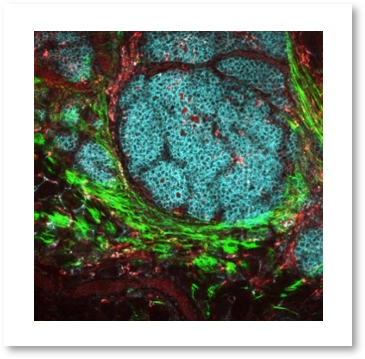
In addition to cancer cells, tumors are made up of a multitude of different cell types, which comprise the tumor microenvironment. These include stromal cells, fibroblasts, endothelial cells that make up blood vessels within the tumor, the extracellular matrix and, perhaps of most interest right now, a multitude of different immune cells. Tumors influence their microenvironment through secreting growth factors, immune suppressive molecules and other signaling molecules that provide the perfect environment for a tumor to thrive. That’s why understanding this microenvironment and finding new ways to disrupt it is such an important approach to cancer treatment.
Ref) NIH (https://visualsonline.cancer.gov/details.cfm?imageid=10573)
2) Acquisition of Cancer-associated Fibroblasts (CAFs) Properties in Early Stage of Cancer
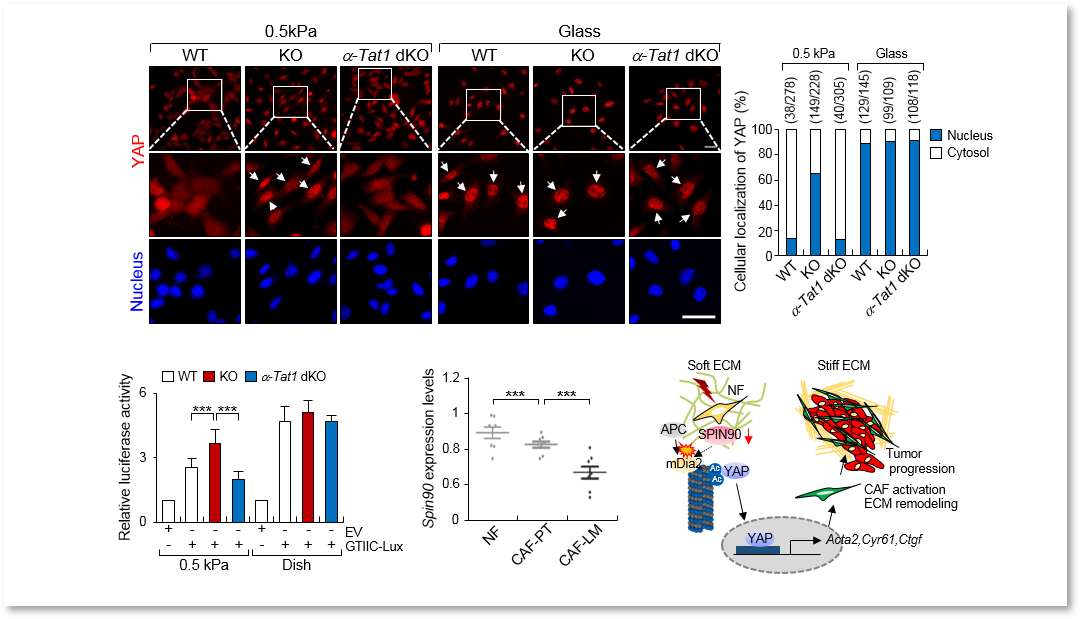
During early tumor development, quiescent fibroblasts, the predominant cell type within normal stroma, undergo transition into myofibroblast-like cells, known as cancer-associated fibroblasts (CAF).
CAFs are responsible for extracellular matrix (ECM) biosynthesis and mechanical remodeling of cancer stroma, which lead to the development of a permissive environment for tumor growth and metastasis. Our research seeks to identify the mechanisms of CAFs acquisition in early stage of cancer.
3) Profiling of Global Gene Expression Depending on Mechanical Stiffness in Cancer Progression
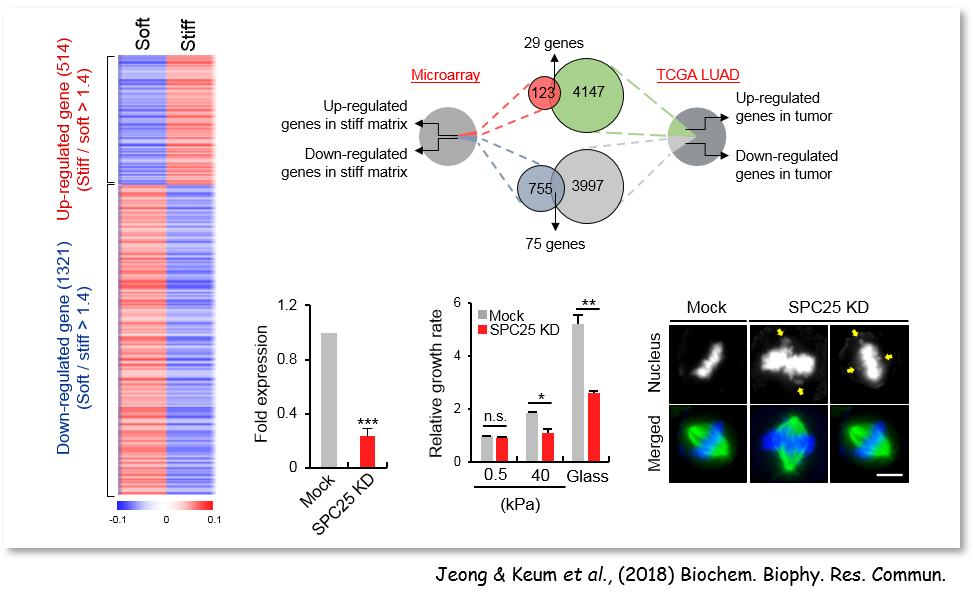
We identified genes integral for cancer development through the combinational analysis of differential matrix stiffness-related gene expression and comparative transcriptome analysis using The Cancer Genome Atlas (TCGA) clinical database. We have further dissected the underlying stiffness-regulated gene and its pathological relevance in solid tumor patients.