
Microtubules are an important part of the cytoskeleton and coordinates variety of cellular processes including cell migration, mitosis, and intracellular transport. As highly dynamic structures comprised α- and β-tubulin hetero-dimers, microtubules continuously polymerize and depolymerize. One mechanism expected to control microtubule properties and functions is post-translational modification (PTM).
1) Study of Microtubule Acetylation and Cancer Progression
Acetylation of α-tubulin can control diverse microtubule functions like signaling, trafficking, and cellular tensegrity, but we are only beginning to uncover the many functions that could impact cancer progression and metastasis.
Our study focused on understanding of molecular mechanisms underlying MT acetylation-mediated signaling in cancers.
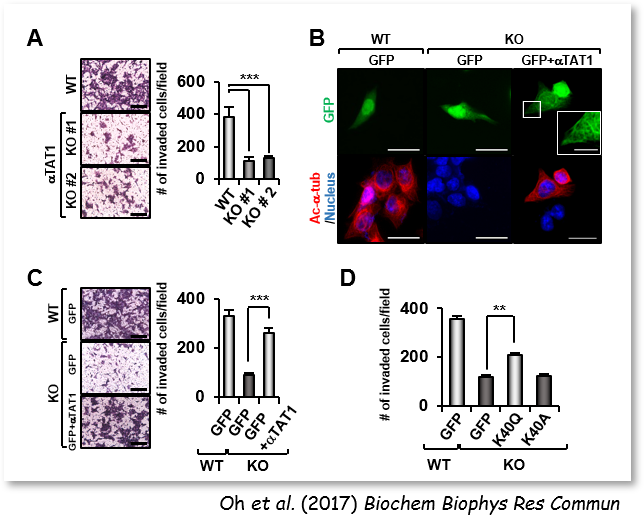
We demonstrated that genetic disruption of tubulin acetyltransferase, αTAT1, inhibits proliferation and invasion of colon cancer cells through decreases in Wnt1/β-catenin signaling.
2) Therapeutic Approaches to Overcome Tumor Microenvironment-mediated Cancer Drug Resistance
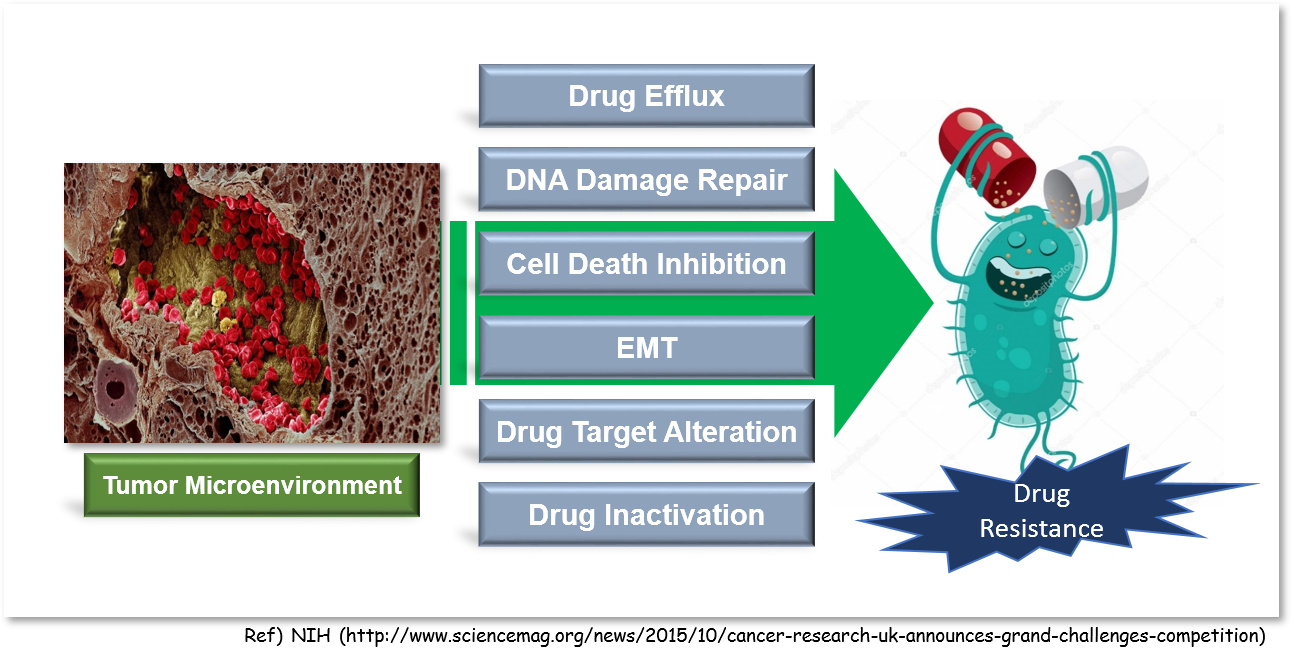
Cancers have the ability to develop resistance to traditional therapies, and the increasing prevalence of these drug resistant cancers. So, overcome cancer drug resistance is very important to cancer therapy. Interactions between cancer and tumor microenvironment can affect the sensitivity of the cancer cells to apoptosis. Our research aims at understanding how tumor microenvironment is linked to the cancer drug resistance.